
- By Charlotte Brown
- November 19, 2026
Most charcuterie board guides stop at sliced salami, a wedge of cheese, and a tub of generic pâté. But that’s the board every guest has seen before.
Holiday entertaining is the single biggest charcuterie-buying window of the year, and the boards that actually get remembered are built on items your guests can’t just pick up at a grocery deli counter.
Key Takeaways
- Charcuterie-related search interest peaks every November and December, according to Accio’s 2026 charcuterie board trend analysis.
- Guests aren’t just buying charcuterie. They want an upgrade from what they could assemble themselves.
- Gourmand carries 18 charcuterie board items across these categories: duck, foie gras and pâté, Italian and Spanish cured meats, chorizo, and French ham.
What to Put on a Charcuterie Board Besides Cheese
A well-built charcuterie board features a variety of cheeses, plus items from these four categories: duck specialties, foie gras and pâté, and cured meats beyond the usual salami.
18 Elevated Charcuterie Items for Your Holiday Board |
||
|
Category |
Gourmand Item |
Traditional Use |
Duck specialty |
Spread cold on toast or crusty bread |
|
|
Sliced thin for a retail case or passed tray |
||
|
Sliced thin, a milder entry point to duck |
||
|
Draped over the board’s edge or wrapped around fruit and vegetables |
||
|
Sliced and served against sweeter accompaniments |
||
Foie gras and pâté |
Sliced cold, served with a sweet counterpoint |
|
|
Sliced to order from a whole prepared lobe |
||
|
Piped or quenelled rather than knife-spread |
||
|
Sliced or spread thick with cornichons and mustard |
||
Cured & international meats |
Sliced thin, served at room temperature |
|
|
Sliced thin, called out by name on the board |
||
|
Sliced thin, a marbled middle-ground item |
||
|
Pre-portioned for a grazing case |
||
|
Sliced thin, served with cornichons and mustard |
||
|
Sliced into rounds or wedges as a centerpiece |
||
|
Sliced into rounds or wedges as a centerpiece, for a board that wants heat |
||
|
Sliced thin, signals French sourcing |
||
|
Pre-sliced retail format, ready for a case |
||
A standard board might stop at one or two of these categories, usually just cured meat, because that’s the easiest to source and price. Duck and foie gras take more supply chain work to get consistently, which is why they read as an upgrade instead of a commodity, and pulling in a French ham or a Spanish-style coppa alongside them signals a board that was built with purpose rather than whatever the case had on hand.
1. Duck Rilletes
A slow-cooked, shredded duck preparation preserved in its own fat and served cold. Spread it on toast points or crusty bread, finished with sea salt or a drizzle of fig preserves. Its coarse texture is the point, don’t over-process it trying to make it look like pâté.
2. Duck Salami
A cured, sliceable salami made from duck rather than pork, with a slightly sweeter, richer flavor profile. It slices thin and holds its shape well on a tray.
3. Sliced Duck Ham
A cured duck ham, sliced thin like a traditional charcuterie ham. It’s a lighter-colored, milder entry point for guests who want the duck flavor without the richness of rillettes or pâté.
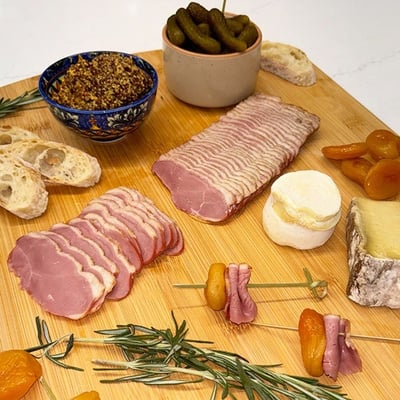
4. Sliced Duck Prosciutto
Duck breast cured and air-dried in the prosciutto style, then sliced paper-thin. It wraps well around a breadstick or melon wedge for a passed bite, and it photographs beautifully draped over a board’s edge.
5. Sliced Smoked Duck Breast
Smoked duck breast, sliced and ready to serve. The smoke adds a savory depth that pairs well against sweeter accompaniments like fig jam or candied pecans.
6. Foie Gras Terrine
A pre-made, ready-to-slice foie gras terrine, built for a tasting menu or a premium board without the in-house labor of pressing one yourself. Slice it cold and serve with a sweet counterpoint like fig or port reduction.
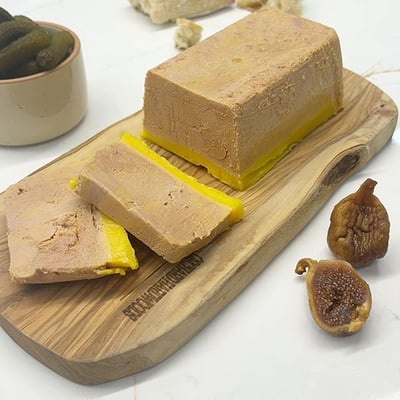
7. Whole Moulard Duck Foie Gras Torchon
A whole lobe prepared using the torchon technique, giving you a clean, even cylinder to slice to order. It’s the item that signals “this board is doing something different,” and it’s worth the extra prep time for a holiday special.
|
Definition: Torchon Technique A French method of preparing whole foie gras. The lobe is seasoned, then rolled tightly in cloth (the word torchon means “dish towel” or “kitchen towel” in French), which shapes it into an even cylinder as it’s gently poached or cured. The cloth keeps the shape uniform through cooking, so once chilled and unwrapped, the lobe slices cleanly into smooth, consistent rounds, unlike a terrine, which is pressed into a mold rather than rolled. |
8. Chicken Liver Mousse
A smoother, lighter spread than rillettes or pâté, piped or quenelled rather than knife-spread. It’s a more accessible entry point to the richness of foie gras mousse for guests who haven’t tried it before.
9. Pâté de Campagne
A coarse, country-style pork pâté, traditionally served sliced or spread thick on crusty bread with cornichons and mustard on the side. It’s the familiar anchor that makes the richer duck and foie gras items feel like a step up rather than a leap.
10. Prosciutto
Classic Italian dry-cured ham, sliced thin and served at room temperature. It’s the board’s most recognizable item, which makes it a safe anchor next to less familiar duck and foie gras options.
11. Prosciutto di Parma
The protected-origin version of prosciutto from the Parma region, with a more delicate, nuttier flavor than standard prosciutto. Worth calling out by name on a menu or card for guests who know the difference.
12. Coppa Italiana
A cured pork shoulder, seasoned and air-dried, sliced thin like salami but with a marbled, melt-in-the-mouth texture. It’s a strong middle-ground item between the lighter prosciuttos and the bolder chorizo.
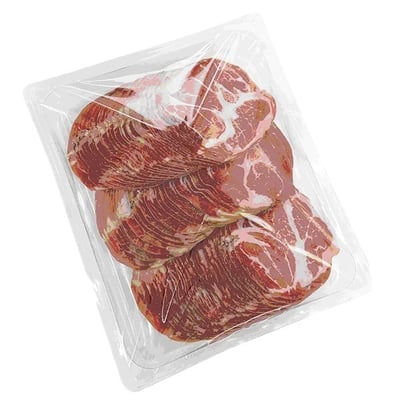
13. Salami Bites
Pre-portioned salami pieces, built for a retail grazing case or a quick grab-and-go board without slicing labor on site.
14. Saucisson Sec
A dry-cured French sausage, traditionally sliced thin and served at room temperature alongside cornichons and a sharp mustard. It’s the board’s workhorse: familiar enough that no guest hesitates.
15. Mild Chorizo Ring
A milder, less smoke-forward chorizo than guests may expect, formed into a ring and sliced into rounds or wedges. It works as a visual centerpiece without fighting the richer items plated near it.
16. Spicy Chorizo Ring
The same ring format with more heat, good for a board that wants one item with a kick against an otherwise rich, mellow lineup.
17. Jambon de Bayonne
A French cured ham from the Bayonne region, lightly salted and air-dried, with a cleaner flavor than prosciutto. It’s a good way to signal French sourcing specifically.
18. Sliced Bayonne Ham
The pre-sliced retail format of the same ham, ready for a board without in-house slicing.
Build a Rave-Worthy Charcuterie with Gourmand
A standout charcuterie board isn’t a bigger board; it’s a mix of unique items. Lead with a duck specialty or a foie gras preparation, anchor it with a familiar cured meat like prosciutto or saucisson sec, and let a chorizo or Bayonne ham round out the flavor range.
The full lineup gives you enough variety to build several different boards from the same core list. Get them all at Gourmand →
Frequently Asked Questions About Charcuterie Boards